
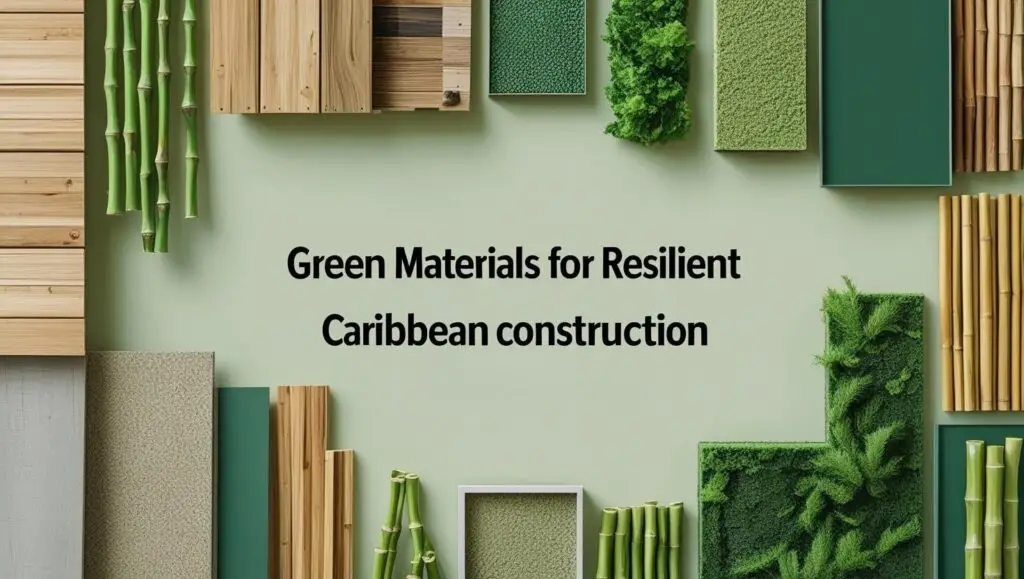
Greener Building with Caribbean-Friendly Materials: A Sustainable Guide for Eco-Conscious Construction
Building sustainably in the Caribbean should be embraced beyond the trendy—it’s a necessity for building climate resilience, improving human health, and ensuring cultural preservation. As a sustainability expert who is passionate about both interior design and sustainable construction, I’m exploring green building materials that are regionally available, culturally relevant, and environmentally responsible. Let’s dive into what makes materials truly eco-friendly, how to avoid greenwashing, and where to source authentic sustainable building products across the region.
🌿What Makes a Material “Green”?
Not all “eco-labelled” products are created equal. In the Caribbean context, truly green building materials should:
- Minimize environmental impact – Low embodied carbon, minimal pollution, ethically-sourced, and resource-efficient production.
- Support human health – Non-toxic, with transparent ingredients.
- Be locally or regionally sourced – Reducing transportation-related emissions.
- Reflect cultural relevance – Materials and techniques that build resilience and community identity.
Given the above characteristics, some traditional but unconventional materials come front of mind. We find examples in various territories in the region that exemplify some combination or other of all four. In Trinidad, tapia houses constructed of clay, mud and grass still exist Using local, low-impact materials helps lower your carbon footprint while preserving regional craftsmanship.
⚠️ Beware the Green Gloss: Understanding Greenwashing
Greenwashing occurs when products or brands claim to be sustainable without verifiable proof. This deceptive marketing is particularly harmful in small Caribbean markets with limited material alternatives and weaker legislative regulations.
Watch for:
- Vague eco-labels like “green”, “organic” or “natural” without certifications.
- Selective sustainability claims highlighting one benefit while concealing others.
- Irrelevant marketing terms (“CFC-free”) that don’t reflect true eco-performance.
- Toxic trade-offs such as “recycled” materials that still off-gas harmful chemicals.
✅ Solution: Always ask for third-party certification or independent data like EPDs (Environmental Product Declarations) to ensure authenticity.
🔍 Trusted Tools to Evaluate Sustainability
Use these credible platforms to make informed material choices:
- Building Transparency (EC3 & tallyLCA): Compare materials using verified carbon data.
- Healthy Materials Lab: Find non-toxic, transparent building materials.
- UGreen: Access region-specific sustainable material databases for Latin America and the Caribbean and training in sustainable architecture and design.
These tools make it easier to design responsibly and avoid greenwashing.
🌴Caribbean Champions: Local Green Materials That Work
Bamboo (Guadua and Local Varieties)
- Benefits: Renewable, fast-growing, high strength-to-weight ratio, and excellent for carbon absorption.
- Application: Used in hybrid systems with concrete or masonry to improve fire and hurricane resistance.
- Extra Advantage: Bamboo groves protect coastal zones by preventing erosion and serving as natural windbreaks.
Clay, Earth, and Grass (Tapia Tradition)
- At Wa Samaki Ecosystems (Trinidad): Builders use clay, grass, recycled glass, and tyres, blending traditional and modern sustainability.
- Eco-Benefits: Naturally cool interiors, flood resilience, and low carbon footprint—ideal for tropical climates.
Sustainable Roofing & Tiles
- Clay and Terracotta tiles – Proven, durable, and great for tropical insulation.
- Upcycled innovations – Creative use of recycled tiles and bottle walls in green building projects.
Volcanic Ash Cement Alternatives
- Research by The University of the West Indies shows volcanic ash can replace cement—cutting emissions and boosting local sourcing.
✅ The Greenwashing Check: Are Claims Legit?
Before choosing materials, ask:
- Are environmental claims backed by EPDs or independent verification?
- Are materials locally sourced and low-carbon?
- Does the product support human and ecosystem health?
🔎 Use EC3 to compare embodied carbon, favour local clay-lime mixes or bamboo over imports, and verify ingredient transparency through Healthy Materials Lab.
 ️Caribbean Green Materials in Action
| Material | Benefits | Caribbean Example / Project |
| Bamboo (Guadua) | Renewable, hurricane-resilient | Jamaica NHT housing; windbreak plantations |
| Clay + Grass (Tapia) | Naturally cool, low-carbon | Wa Samaki Ecosystems, Trinidad |
| Recycled Elements | Reduces waste, saves emissions | Glass bottle walls, tyre structures |
| Clay Tiles | Durable, thermally efficient | Traditional Caribbean homes |
| Volcanic Ash Concrete | Lower emissions, regional sourcing | UWI research projects |
🛒 Top 5 Caribbean Suppliers of Sustainable Building Materials
- Island Green Building Supply – Eco-conscious products for homes, schools, and resorts across the Caribbean.
- Triangle Exports – Miami-based exporter specializing in sustainable materials for Caribbean construction sites.
- Safari Thatch – Experts in natural thatch, bamboo, and tropical aesthetic materials.
- Advantage Lumber – Luxury decking, siding, and flooring, with eco-sourcing and Caribbean delivery.
- Durapalm (Smith & Fong) – Sustainable palm wood ideal for interiors and exteriors in tropical environments.
Why They Stand Out:
- Local Relevance: Reduces shipping emissions by serving Caribbean markets.
- Authenticity & Performance: Materials suited for tropical weather.
- End-to-End Support: Guidance from sourcing to logistics.
🌱 Pro Tip: Vet for Authentic Sustainability
When evaluating eco-friendly building materials, always:
- Request EPDs or ingredient transparency statements.
- Check certifications for performance in tropical climates.
- Prioritize local sourcing to strengthen island economies and lower emissions.
🌺 Wrapping It Up: Designing for Place and Purpose
Sustainable construction in the Caribbean blends technology with tradition. By choosing bamboo, clay-lime mixes, volcanic ash cement, and recycled materials, you create not only resilient structures—but healthier, more regenerative communities.
Real sustainability is about transparency, cultural respect, and climate-smart design rooted in Caribbean identity.