
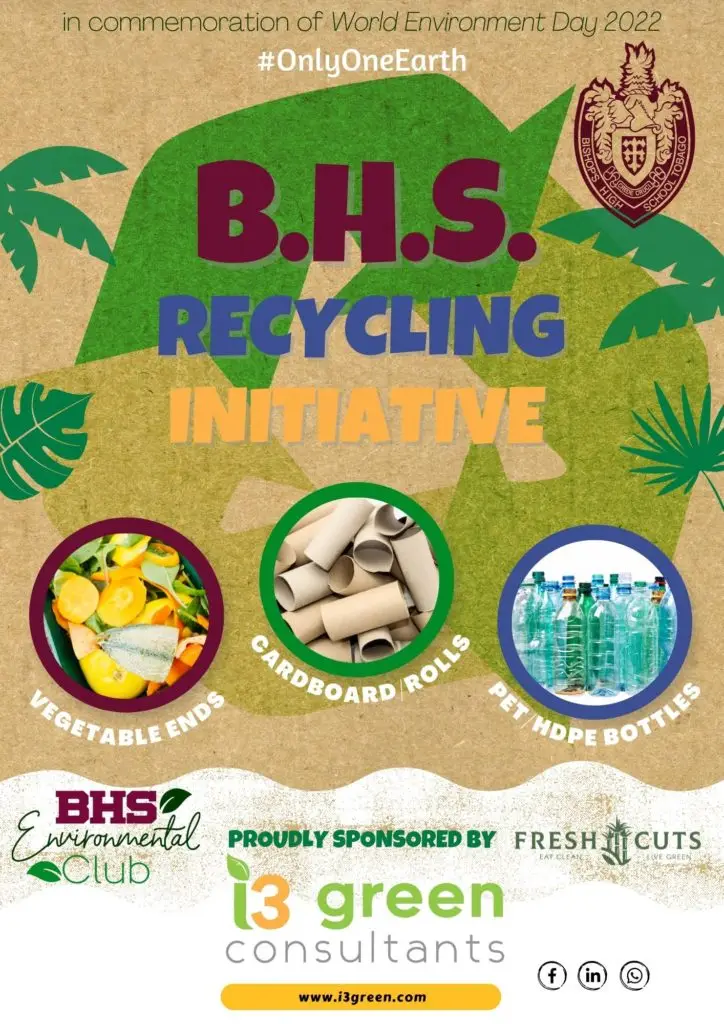
In honour of World Environment Day 2022 and acknowledging its theme, “Only One Earth”, Bishop’s High School, Tobago announced the launch of its school-wide recycling initiative with an official handover of recycling bins at the school on Thursday June 09. The Bishop’s Recycling Initiative (BRI) is one element of a comprehensive program for greening Bishop’s High.
This initiative is the brainchild of the B.H.S. Environmental Club and alumna Ms. Petal Joseph, advisor to the club. As a sustainability and green building consultant, she is no stranger to such initiatives. Petal assumed sole responsibility for greening the island’s events, often without any funding. The Tobago Jazz Experience 2018 introduced recycling for the first time ever to Tobago’s event experience. In the year and half to come, she became a staple at other iconic festivals and events around the island.
Eight years prior, in 2010, she was instrumental in the establishment of the Green Team at the then Ministry of Local Government in Trinidad. While there, she coordinated and hosted a green expo and screen festival for the ministry’s staff. Subsequently, at the San Juan/Laventille Regional Corporation (SJLRC), Petal served as their Regional Planner and advised on all green projects and sustainability concepts.
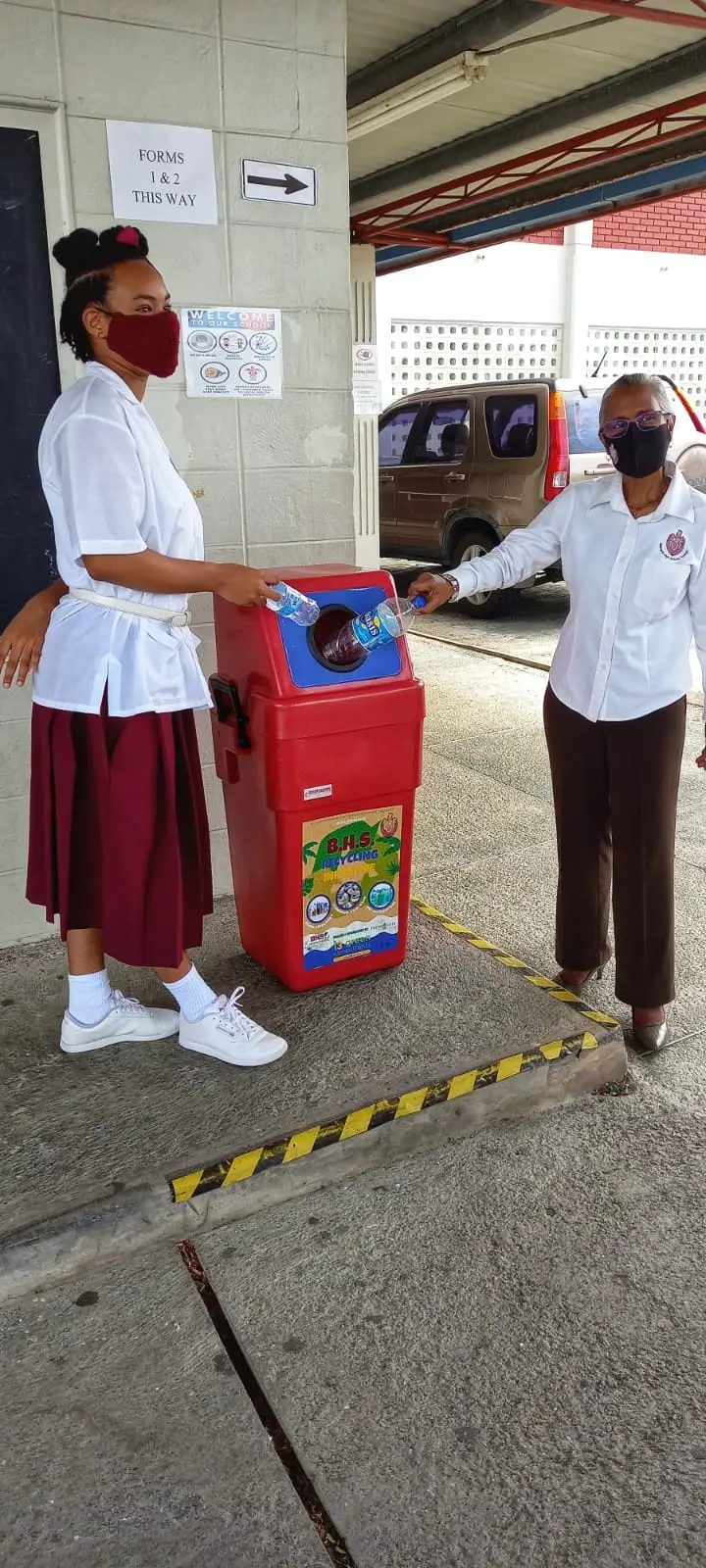
Initially, the BRI comprises 12, 30-gallon bins for collecting 3 streams of waste – paper, plastics & cans, and organics – and 1 community bin, donated by the Tobago Recycling Resource Initiative (TRRI). By creating a holistic greening plan, Bishop’s High signals its ambition to become the greenest school on the island. It speaks to the school’s commitment to making positive impacts on our island’s environment through waste diversion/reduction and resource management. Once fully implemented, the BRI aims to include composting and waste oil recovery.
Other elements for the overall greening of the school include solar power generation and onsite distillation of rainwater in the immediate future. The rollout of the entire program is phased. In this way, the education of staff and students – an essential feature – can take place. Thus increasing the likelihood of the program’s success.